
How Do I Pack Carry-On Only for a Two-Week International Trip?
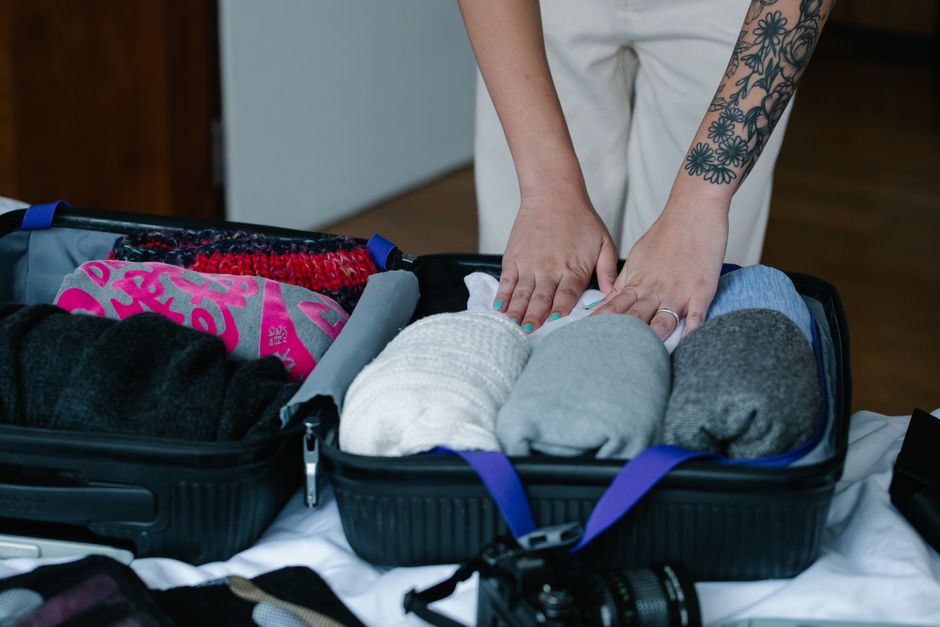
Pack a small, repeatable wardrobe in your carry-on and treat your under-seat personal item as a self-contained continuity kit: travel documents, medication, valuables, electronics, chargers, toiletries, and a 48-hour backup outfit. This division protects the items that cannot be replaced quickly if a carry-on is gate-checked or delayed, while still giving you enough clothing for two weeks through planned rewearing and laundry.
The apparent contradiction is that a two-week trip sounds like a volume problem, while airline travel makes it a risk-management problem. IATA reports that 99.5% of baggage arrives with its passenger and that most mishandled bags return within 48 hours; that is reassuring at the system level, but it does not help on the first evening without medication, a charging cable, or clean underwear. The practical answer is not a larger bag. It is a deliberate split between what is convenient and what is indispensable.
What should I put in my personal item for a two-week Europe trip?
Your personal item should hold every item you need to cross a border, sleep comfortably for two days, and communicate if the carry-on disappears into the hold. Keep it under the seat because cabin bags can be removed at the gate when overhead space is full, as IATA explains.
Start with the irreplaceable layer: passport, payment cards, cash, keys, glasses, travel documents, lodging details, insurance documents, and prescription copies. The CDC recommends retaining print and digital versions of travel documents, and its packing guidance also includes embassy or consulate information. This is a small administrative burden that prevents a large logistical failure.
Then add the continuity layer: phone, charging cable, laptop or tablet if needed, headphones, and a power bank. TSA requires spare lithium batteries, including power banks and charging cases, to remain in carry-on baggage; they do not belong in a checked bag. Keep these items in the personal item rather than the overhead carry-on, because a gate check changes the status of that bag in seconds.
| Personal-item group | What belongs there | Reason |
|---|---|---|
| Documents and money | Passport, cards, cash, booking and insurance information | DOT advises keeping critical and valuable items out of baggage that could be checked. |
| Health | Prescription and over-the-counter medication, prescription copies, glasses or contacts | These can be difficult or unsafe to replace during a delay. |
| Power and communication | Phone, charging cable, power bank, essential devices | Spare batteries must remain in carry-on baggage under TSA guidance. |
| First 48 hours | Underwear, sleepwear, a top, bottoms, socks, basic toiletries, period supplies | It bridges the interval in which most mishandled bags are returned, without assuming that yours will be immediate. |
For the backup outfit, choose pieces that work as clothing rather than emergency clothing: a neutral top, comfortable bottoms, underwear, socks, and sleepwear. Add weather protection only if it cannot be worn on the plane. A bulky layer consumes the same precious volume whether it is fashionable or merely pessimistic.
What essentials should stay with me if my checked bag is delayed?
Medication, identification, money, keys, essential electronics, fragile items, and first-day toiletries should stay with you because delayed-bag reimbursement cannot restore access when you need it. The U.S. Department of Transportation explicitly advises against placing medicine, passports, cash, cards, cameras, eyeglasses, and similar critical items in baggage that could be checked, including a gate-checked carry-on.
Medication gets a stricter rule than the rest. The CDC directs travelers to bring prescription and over-the-counter medicine for the entire trip plus extra for travel delays, in a carry-on, and to retain original labeled containers. It also advises checking destination and layover rules because some countries restrict supplies of certain medicines or require documentation. The State Department reaches the same operational conclusion: do not put medication in checked luggage.
Toiletries require a more selective approach. TSA permits liquids, aerosols, gels, creams, and pastes in containers of 3.4 ounces (100 milliliters) or less inside one quart-sized bag. Decant only the products required for the first two days, then leave the rest in the carry-on. That constraint is useful: it forces a distinction between what is necessary and what is merely familiar. If your trip affects your skin routine, keep the abbreviated routine together; this site’s guide to choosing a spot treatment for active pimples can help identify which product deserves limited liquids space.
Keep receipts if you must buy necessities after a delay. DOT says airlines must compensate passengers for reasonable, verifiable, actual incidental expenses caused by delayed baggage, subject to applicable liability limits, and cannot impose an arbitrary daily reimbursement cap. For international itineraries covered by the Montreal Convention, DOT lists a maximum liability of 1,519 Special Drawing Rights, approximately $2,175 per passenger. Reimbursement is a remedy, not a packing system.
Can I pack enough for two weeks using only a carry-on and personal item?
Yes: two weeks of travel can fit in a carry-on and personal item when you pack a capsule wardrobe for repeated combinations rather than fourteen isolated outfits. The central design principle is dependency reduction. Each garment should combine with several others, and each category should have a clear job: travel, walking, dining, sleep, and weather protection.
Build around a restrained color base, then choose tops and layers that work with every bottom. Wear the largest shoes and outer layer in transit. Pack the remaining shoes only when they solve a different itinerary requirement, not because they create a different look. The outcome is less about deprivation than about refusing duplicates with no separate function.
Place the capsule in the carry-on and reserve the personal item for the non-negotiables described above. This is also the right response to airline variability. IATA gives 56 x 45 x 25 centimeters (22 x 18 x 10 inches), including wheels and handles, as a common carry-on reference, but carriers set their own limits and some weight allowances begin at 5 kilograms (11 pounds). The DOT likewise notes that no single federal standard governs carry-on size, weight, or bag count. Check the exact airline allowance before packing; a carefully designed system still fails if the bag itself exceeds the carrier's rule.
Finally, reduce the likelihood of a disruption where routing permits. DOT ranks nonstop flights as the lowest baggage-disruption risk, followed by through flights, same-airline connections, and then interline connections. That hierarchy does not eliminate risk. It explains why the under-seat kit remains the invariant part of the system.
The durable rule is simple: your carry-on carries the trip; your personal item carries the first two days and everything that cannot be replaced. Pack according to that distinction, and a gate check becomes an inconvenience rather than a cascading failure.
Frequently Asked Questions
How many shoes should I bring for a carry-on-only trip?
Bring the smallest shoe rotation that works with your itinerary and wear the bulkiest pair in transit. The governing constraint is not a universal number; it is whether each pair earns space by serving a distinct purpose. IATA notes that airline cabin-bag allowances vary, so confirm the airline's size and weight rules before deciding how much footwear the carry-on can absorb.
Should I use compression cubes or regular packing cubes?
Either can create order, but neither changes an airline's cabin-bag allowance. Use the version that lets you see clothing groups quickly and still close the bag without force. Put the clothing needed during the first two days in the personal item rather than relying on any cube inside a carry-on that could be gate-checked.
What toiletries and medications should never go in checked luggage?
Medication should never go in checked luggage: the CDC and U.S. Department of State say to carry enough for the whole trip plus extra for delays, in labeled containers. Keep immediate toiletries with you as well, since the DOT recommends having first-day necessities, including toiletries and a change of underwear, in a carry-on. TSA permits carry-on liquids, gels, creams, and pastes in containers of 3.4 ounces (100 milliliters) or less within one quart-sized bag; medication is exempt from that standard rule but can receive additional screening.
Sources
- U.S. Department of Transportation: Lost, Delayed, or Damaged Baggage
- U.S. Department of Transportation: Tips for Avoiding Baggage Issues
- Centers for Disease Control and Prevention: Travel Abroad With Medicine
- Centers for Disease Control and Prevention: Pack Smart
- Transportation Security Administration: Liquids, Aerosols, Gels Rule
- Transportation Security Administration: Lithium Batteries
- International Air Transport Association: Passenger Baggage Rules