
What Is the Best Fruit to Eat Every Day for Nutrition and Fullness?
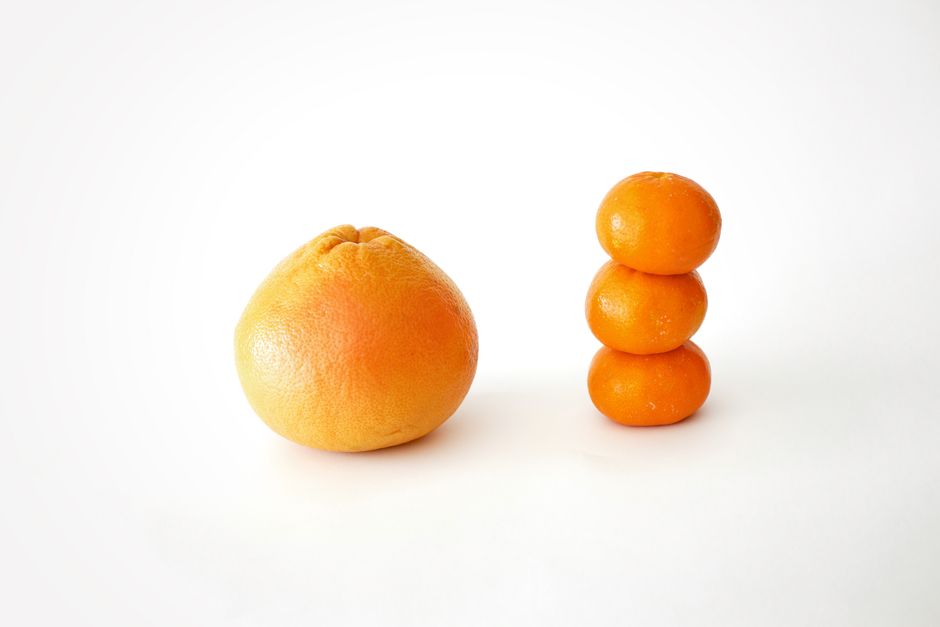
There is no single best fruit for every adult. For an everyday default, choose whole fruit you will eat consistently, then vary it according to the nutrient you need: berries, pears, and apples with skin for fiber; oranges, kiwifruit, and strawberries for vitamin C; and bananas, prunes, cantaloupe, guava, or kiwifruit for potassium. Whole fruit should do most of the work, not juice.
The apparent puzzle is that fruit is often discussed as if it were one nutritional object. It is not. A pear and an orange both count as fruit, but they solve different problems. The useful question is therefore not which fruit has the highest status, but which fruit closes the gap in your ordinary eating pattern.
What is the healthiest fruit to eat every day?
The healthiest fruit to eat every day is a whole fruit that fits your nutritional priority and remains practical enough to repeat. USDA MyPlate identifies fruit as a source of potassium, dietary fiber, vitamin C, and folate, while recommending that at least half of fruit intake come from whole fruit rather than 100% juice.
That distinction is structural, not cosmetic. Whole or cut fruit provides dietary fiber; juice has little or no fiber. A glass of 100% juice can count as a cup-equivalent, but it should not become the default simply because it is convenient. Fresh, frozen, canned, and dried fruit all count, so access and storage are legitimate parts of the decision.
Start with the fruit target before debating varieties. MyPlate generally recommends 1.5 to 2 cups daily for women age 19 and older, 2 to 2.5 cups for men ages 19 to 59, and 2 cups for men age 60 and older. One cup of fresh, frozen, or canned fruit counts as one cup-equivalent; one-half cup dried fruit does the same. This matters because dried fruit is compact: useful for storage, but easy to treat as an invisible extra rather than a measured portion.
| Goal | Fruit options supported by the sources | What the evidence shows |
|---|---|---|
| Fiber-focused everyday choice | Guava, raspberries, blackberries, pears, apples with skin | These listed portions provide 4.8 to 8.9 grams of fiber. |
| Vitamin C priority | Orange, kiwifruit, strawberries | A medium orange provides 70 mg; a medium kiwifruit 64 mg; one-half cup sliced strawberries 49 mg. |
| Potassium source | Banana, prunes, cantaloupe, guava, kiwifruit | USDA MyPlate identifies each as a potassium source. |
| Convenient stock-up choice | Frozen, canned, or dried fruit | Each counts toward recommended fruit intake when used in the stated cup-equivalent amounts. |
Vitamin C presents a separate trade-off. The National Institutes of Health Office of Dietary Supplements reports that vitamin C is water-soluble and can decline with prolonged storage and cooking. Fruits commonly eaten raw, such as oranges, kiwifruit, and strawberries, make the comparison straightforward: use them when vitamin C is the immediate priority, not because they have displaced every other fruit from the diet.
Which fruit has the most fiber and keeps you full?
Among the portions listed in the Dietary Guidelines data, guava has the most fiber at 8.9 grams per cup, followed by raspberries at 8.0 grams and blackberries at 7.6 grams. One medium Asian pear provides 6.5 grams, one medium pear 5.5 grams, and one medium apple with skin 4.8 grams. That is the cleanest evidence-based ranking available from the supplied sources.
“Keeps you full” is a broader claim than the data can prove here: the sources provide fiber amounts, not a universal satiety ranking. Still, fiber is the relevant comparison point when choosing fruit intended to make a snack more substantial. The Dietary Guidelines for Americans emphasizes that adequate fiber matters for overall health, including heart and digestive health.
For constipation, the decision becomes more specific. The National Institute of Diabetes and Digestive and Kidney Diseases lists berries, apples with skin, oranges, and pears as fruit sources of fiber and states that adults should get 22 to 34 grams of fiber daily, depending on age and sex. Its operational advice is equally important: add fiber gradually and drink water and other liquids so the fiber can work better and stools can become softer and easier to pass.
Do not turn fruit into a one-item solution. A high-fiber fruit can help move your overall intake toward the daily range, but no fruit selected at breakfast repairs a consistently low-fiber diet by itself. The practical sequence is simpler: keep several whole-fruit options available, choose a fiber-forward option when that is the goal, and increase intake gradually rather than making an abrupt change.
Is it better to eat fruit in the morning or at night?
Neither morning nor night is inherently better; the supplied sources set daily amount and form priorities, not a preferred clock time. The decisive issue is whether fruit reliably replaces less useful defaults and helps you reach an appropriate daily amount. Timing is logistics.
Morning fruit can make sense when it is the easiest time to use an orange, berries, or a banana. Night fruit can make equal sense when it is the time you will actually eat it. The evidence does not establish that a specific fruit is uniquely required after exercise, nor does it establish a hydration ranking among fruits; public data in the supplied sources do not cover those comparisons. Avoid attaching certainty to claims the evidence has not earned.
Whole fruit also travels better than the usual discussion suggests. A banana, apple with skin, pear, or measured dried-fruit portion requires little preparation, while frozen fruit reduces the penalty for not shopping frequently. On a travel day, treat a fruit plan as one small part of practical trip preparation, much like choosing the right accommodation in VIA Rail Canadian Sleepers: Pick the Right Berth, Cabin, or Prestige: the best choice is often the one that works under real constraints.
A sound everyday system has three parts: buy a few fruits with different jobs, keep at least one shelf-stable or frozen backup, and favor whole fruit over juice. The U.S. Department of Agriculture Economic Research Service reports that about 80% of the U.S. population consumes less fruit than recommended. The problem is rarely an inability to name a perfect fruit. It is the absence of a repeatable default.
Frequently Asked Questions
Which fruits are best if I am trying to eat less sugar?
The supplied public sources do not provide a sugar-per-serving comparison that can support a reliable ranking of lower-sugar fruits. A more defensible rule is to choose whole fruit rather than relying on juice, because USDA MyPlate states that whole or cut fruit provides dietary fiber while fruit juice has little or no fiber. Use the fruit options you enjoy and can portion consistently rather than treating one fruit as a universal answer.
Are frozen fruits as healthy as fresh fruits?
Frozen fruit counts toward the USDA fruit recommendation in the same way that fresh and canned fruit do: one cup of fresh, frozen, or canned fruit is a cup-equivalent. The sources supplied here do not make a blanket claim that frozen and fresh fruit are nutritionally identical in every circumstance. For everyday planning, frozen fruit is a valid fruit choice when it helps you keep fruit available.
Can I eat too much fruit in one day?
Fruit targets vary by age, sex, and other individual factors. USDA MyPlate generally recommends 1.5 to 2 cups daily for women age 19 and older, 2 to 2.5 cups for men ages 19 to 59, and 2 cups for men age 60 and older. If increasing fruit also sharply increases your fiber intake, NIDDK advises adding fiber gradually and drinking liquids to help it work.
Sources
- USDA MyPlate: Fruits
- National Institute of Diabetes and Digestive and Kidney Diseases: Eating, Diet, and Nutrition for Constipation
- Dietary Guidelines for Americans: Food Sources of Dietary Fiber
- National Institutes of Health Office of Dietary Supplements: Vitamin C Fact Sheet for Health Professionals
- USDA Economic Research Service: Peeling Open U.S. Fruit Consumption Trends