
Which Washington Town Is Best for Retirement?
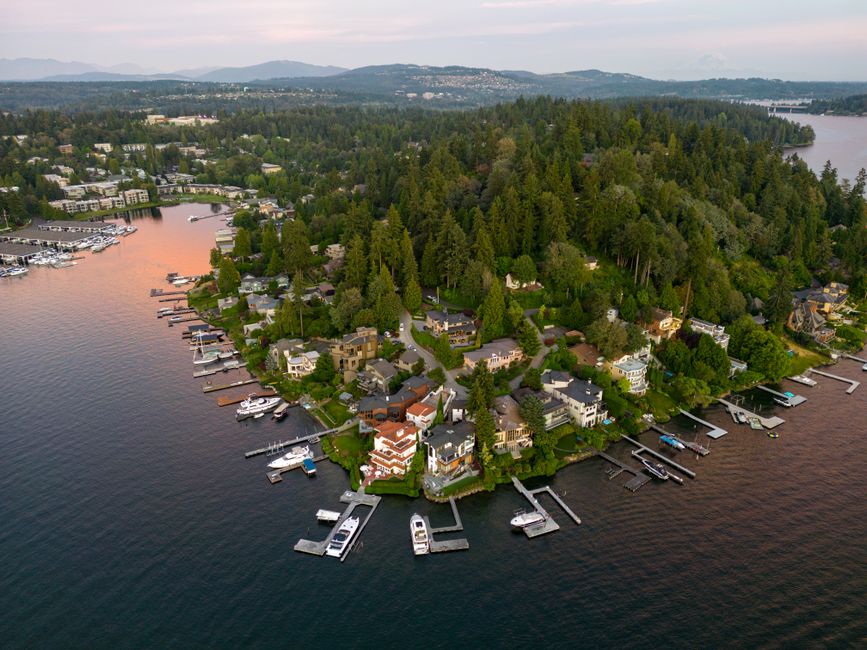
The best Washington retirement town depends less on a single ranking than on the trade-off you can document: Sequim offers markedly drier conditions and published local housing benchmarks; Port Townsend has a state-supported connection to Seattle and Sea-Tac; Anacortes has a local district hospital and access to regional care; and Gig Harbor requires a separate, current review of housing, walking routes, and transport options.
The apparent puzzle is that a town can look ideal on a map and fail under the conditions that matter after a move: specialist appointments, wet-season routines, a shrinking driving radius, and the real monthly cost of a home. The useful unit of analysis is therefore not “best town.” It is a repeatable scorecard: local hospital options, regional-care travel time, climate exposure, housing evidence, walkability observed at the address level, and transportation redundancy.
Which Washington towns have good healthcare access for retirees?
Port Townsend, Sequim, and Anacortes have identifiable local hospital options, but healthcare access should be judged by care pathways rather than a pin on a map. The Washington State Department of Health Community Hospital Directory lists Jefferson Healthcare in Port Townsend, Olympic Medical Center in Port Angeles for the Sequim-area comparison, and Island Hospital in Anacortes; it also lists St. Anthony Hospital in Gig Harbor.
That establishes availability, not equivalence. A local hospital can be the right starting point for urgent care while a different facility handles specialized treatment. The Department of Health's rural-health materials describe county-level access reports as snapshots that can identify provider shortages among rural and underserved populations. That distinction matters because a short drive to a hospital does not answer whether the needed clinician, appointment, or service is available there.
Use the Centers for Medicare & Medicaid Services hospital-quality data as the second layer of the comparison. CMS states that its 2026 overall rating draws on 52 publicly reported measures across mortality, safety, readmission, patient experience, and timely and effective care. Compare the Medicare-certified hospitals serving each candidate town, then map the trip required when local care is not enough. Proximity is a convenience measure; it is not a quality measure.
| Town | Documented local or nearby care signal | Question the evidence leaves for a reconnaissance trip |
|---|---|---|
| Sequim | Olympic Medical Center in Port Angeles is the relevant hospital option in the Department of Health directory. | How long is the actual route from a prospective home, including the return trip after an appointment? |
| Port Townsend | Jefferson Healthcare is listed in Port Townsend by the Department of Health. | Which specialist trips require travel beyond town? |
| Anacortes | Island Hospital is listed in Anacortes, while Skagit Valley Hospital in Mount Vernon is a regional-care option. | What is the practical route to each facility at the times care is likely to be needed? |
| Gig Harbor | St. Anthony Hospital appears in the Pierce County listing. | Which services are local, and which require travel elsewhere? |
Is Sequim a good place to retire if I want less rain?
Yes: among the places covered by these sources, Sequim has the clearest evidence for a lower-rainfall retirement preference. The University of Washington's Washington State Climate Office reports that Sequim receives 23.98 inches of average annual precipitation, while Quinault, only 56 miles away on the windward side of the Olympic Mountains, receives 151.45 inches. The explanation is geographic rather than promotional: Sequim sits on the leeward, or rain-shadow, side of the Olympics.
The contrast corrects a common mistake. “Western Washington” is not a usable climate category for a retirement decision. The Climate Office gives Washington a statewide average annual precipitation of about 45 inches and explains that eastern Washington is generally colder in winter and warmer in summer because it lacks Puget Sound and Pacific Ocean moderation. A climate preference needs to be translated into a town-level question: is lower rainfall, milder seasonal variation, or another condition doing the work?
Housing evidence makes the Sequim case more concrete, though not automatically inexpensive. U.S. Census Bureau QuickFacts reports that, for 2020-2024, Sequim's median value of owner-occupied homes was $408,700, median gross rent was $1,195, median monthly owner costs were $1,658 with a mortgage, and median monthly owner costs were $697 without a mortgage. These are area benchmarks, not a prediction of the price or carrying cost of a particular home.
QuickFacts also reports that people age 65 and older represented 45.6% of Sequim's population for 2020-2024. That may make retirement-oriented services easier to encounter, but public demographic data cannot establish whether a particular block is walkable or socially suitable. Density and age composition are clues. They are not a substitute for walking the daily routes.
How do Port Townsend, Gig Harbor, and Anacortes compare for retirement?
Port Townsend is the strongest of the three on documented intercity connectivity, Anacortes has a documented local-hospital-plus-regional-care structure, and Gig Harbor is represented in the supplied hospital directory but lacks equivalent housing and transit detail in the supplied material. The data therefore support a framework, not a manufactured league table.
For Port Townsend, transportation is unusually concrete. The Washington State Department of Transportation says the Dungeness Line connects Port Townsend and Port Angeles with Seattle and Sea-Tac International Airport, along with links to Amtrak, Greyhound, and Washington State Ferries. That is useful for airport access and occasional long-distance trips, particularly for households trying to reduce driving dependence. It does not prove car-free living; local trips still need to be observed from the prospective address.
Anacortes presents a different pattern: Island Hospital anchors local access, while Skagit Valley Hospital in Mount Vernon is the larger nearby comparison point identified by the Department of Health. Gig Harbor's St. Anthony listing establishes a hospital option, but the research supplied here does not provide comparable local climate, housing, walkability, or intercity-bus facts. The honest conclusion is narrow: those missing categories require current primary data and an on-the-ground check before comparison.
A reconnaissance trip should run the same experiment in each town: travel from the candidate home to the hospital, primary-care office, grocery store, pharmacy, library or civic destination, and the nearest intercity connection; repeat a key route without relying on a car; then record time, terrain, crossings, weather exposure, and the number of transfers. Travel planning is part of the housing decision, much as readers weigh trade-offs in Should I Book a Vacation Online or Use a Travel Agent?. The address, not the town slogan, determines the daily system.
Finally, treat taxes as a separate line in the framework. The Washington State Department of Revenue states that Washington currently has no individual income tax. It also states that, under legislation established by the 2026 Legislature, a 9.9% individual income tax is scheduled to begin on January 1, 2028, for annual adjusted gross income above $1 million, with first returns due in 2029. That fact can affect some households, but it does not resolve the more immediate question of whether a town's care, climate, housing, and transport system fits their needs.
Frequently Asked Questions
Can retirees live comfortably in Washington without a car?
It depends on the town, the location of the home, and the frequency of medical and daily errands. The Washington State Department of Transportation documents that the Dungeness Line connects Port Townsend and Port Angeles with Seattle and Sea-Tac, but an intercity route is not the same as walkable access to groceries, clinics, or social life. A reconnaissance trip should test the actual routes between a prospective address and those destinations.
Which Washington retirement towns are affordable near the coast?
The supplied public data establish a housing benchmark for Sequim, not a full price comparison across coastal towns. According to U.S. Census Bureau QuickFacts for 2020-2024, Sequim's median owner-occupied home value was $408,700 and its median gross rent was $1,195. Comparable current housing data for Port Townsend, Gig Harbor, and Anacortes should be gathered before labeling any of them affordable.
Does Washington's lack of state income tax make it a good retirement state?
Washington currently has no individual income tax, according to the Washington State Department of Revenue. The same agency states that a 9.9% tax is scheduled to begin on January 1, 2028, for annual adjusted gross income above $1 million. Tax treatment is one input, not a substitute for evaluating housing, healthcare access, and transportation.
Sources
- Washington State Climate Office, University of Washington: Washington's Climate
- U.S. Census Bureau QuickFacts: Sequim city, Washington
- Washington State Department of Health Community Hospital Directory
- Washington State Department of Health Rural Health Data, Maps, and Resources
- Centers for Medicare & Medicaid Services Overall Hospital Quality Star Rating
- Washington State Department of Transportation Travel Washington Intercity Bus
- Washington State Department of Revenue Income Tax
Disclaimer: This article is for general information only and is not financial advice. It does not take your personal circumstances into account, and past performance does not predict future results. Speak to a licensed financial professional before making money decisions.
Keep reading
How Do I Find an Apartment Near Work Without Blowing My Budget?
A commute-first method for comparing apartments by realistic travel time, transit access, daily errands, and total cost.
What Does an Apartment Really Cost Beyond the Advertised Rent?
Calculate an apartment’s true move-in and monthly cost by separating fees, deposits, utilities, parking, and pet charges from advertised rent.

What Should I Check Before Buying an Older Bungalow?
A research-based due-diligence guide to inspecting an older bungalow, using specialists, reviewing insurance, and weighing repair terms.